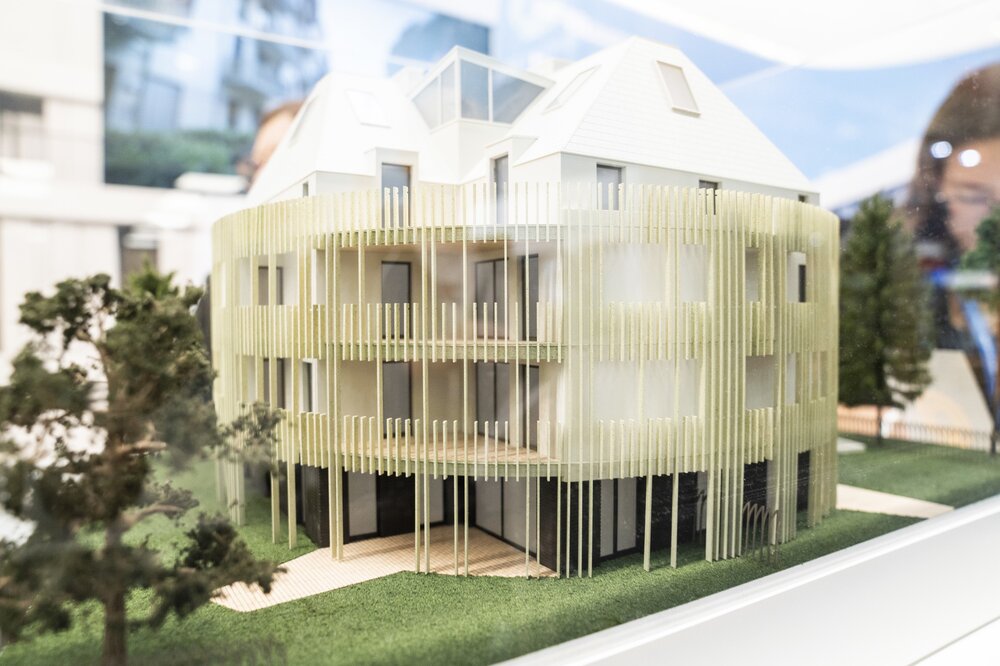

Residential property at EXPO REAL: Latest figures, developments and trends for 2026

Rising rents and prices, coupled with housing shortages, have long been the defining aspects of the residential property market. Another significant factor is the energy-efficient renovation of existing housing stock. However, at the same time, residential construction is significantly declining, due to higher financing costs, rising prices for materials, and a shortage of skilled labor. In this challenging environment, EXPO REAL provides an opportunity for exchange, discussion, and orientation on the topic of residential properties
What does EXPO REAL have to offer in the area of residential real estate?
The international trade fair for real estate, investment, and infrastructure offers a platform for everyone involved in the housing sector to learn about trends, developments, innovations, and requirements, and to exchange ideas with other experts.
Which exhibitors specializing in residential real estate are represented at EXPO REAL?
About 50 housing companies have registered for EXPO REAL 2026. The spectrum ranges from what is likely Germany’s largest private housing company, Vonovia, to public housing authorities and large corporations, all the way to nonprofit housing organizations; but you’ll also find providers of student housing, micro-living, co-living, and serviced apartments—fully furnished apartments that can be booked for various lengths of time. You’ll also find companies that focus not only on individual housing projects and properties but also on the development of entire neighborhoods. And last but not least, there are numerous local governments—those responsible for designating land for residential development. It’s also worth taking a look at exhibitors offering digital solutions for planning and construction, as well as those specializing in climate impact analysis for real estate.
Program items related to residential real estate
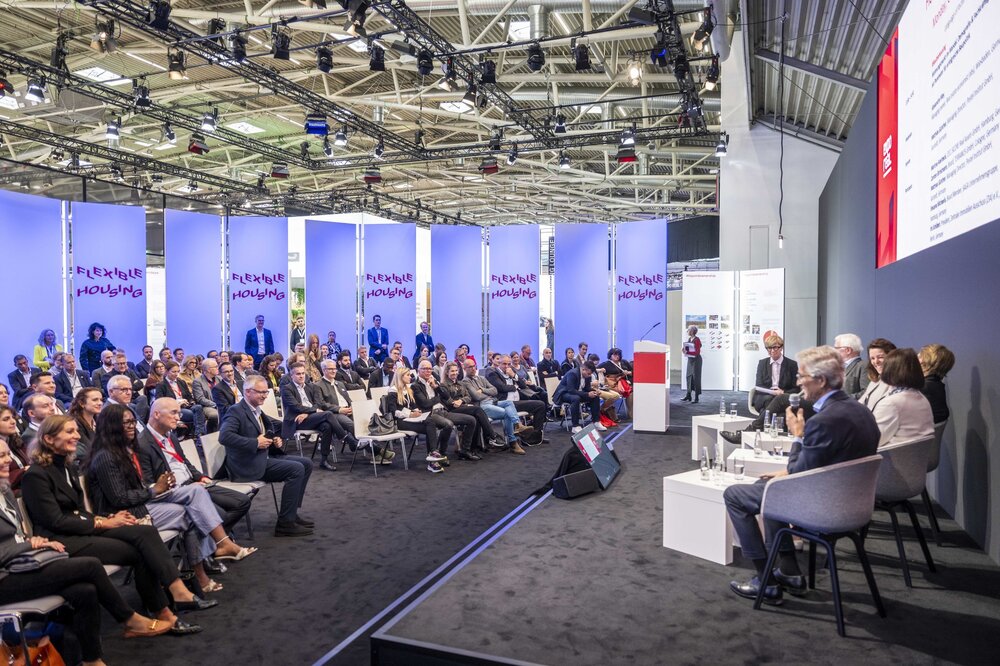
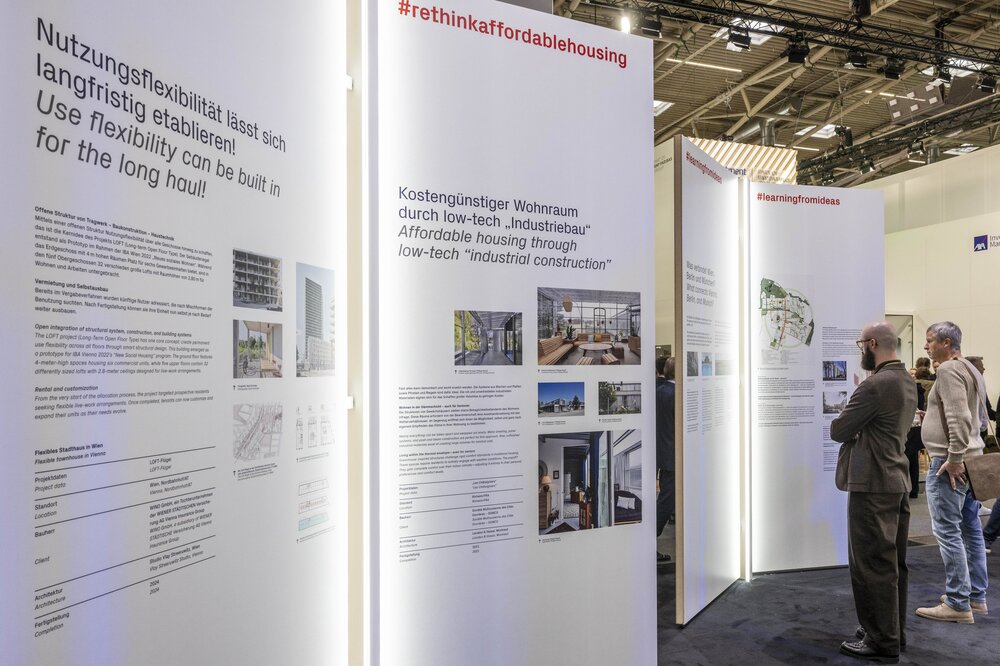
With the new “Flexible Housing” exhibition area in Hall B3, EXPO REAL 2026 is shining a spotlight on new and flexible housing concepts. Under the theme “Close the Housing Gap,” the focus is on how urgently needed housing can be created more quickly, more affordably, and more sustainably. An accompanying exhibition showcases solutions for resource-efficient and affordable housing. On the accompanying stage, the need for action in housing construction will be discussed, along with concrete solutions and innovative concepts for the future of housing.
The conference program also focuses on the issue of affordable housing. This applies not only to housing in general, but also to options for seniors, whose numbers are steadily increasing. They are the group with the highest average space consumption, often because moving to a smaller apartment is now frequently more expensive than staying in a large apartment where they have lived for years or even decades. The EXPO REAL 2026 conference program includes, among other things, a panel on student housing and the European residential investment market.
Residential properties—a diverse asset class
A residential property is a building primarily intended for living. Housing is a fundamental human need and living space enjoys a special protection as privacy. However, the term residential properties conjures different images for different people.
Types of residential properties
A residential property could be a standalone single-family or duplex house with surrounding gardens, a townhouse or an apartment building—the latter being more common in cities, where the individual units are either rental apartments or owner-occupied. In Germany, most people reside in such multi-family houses, with only a third of the population living in single-family homes. A distinction also exists between home ownership and rental apartments. In 2024, a good half of the population (52.8 percent) in Germany lived in rented accommodation, and the demand for affordable housing relates almost exclusively to the rental apartment market.
A unique form of housing is the tiny house, with living areas ranging from 15 to 45 square meters. The concept originated in the U.S. and is embraced in Germany by proponents of minimalistic living. However, these houses also serve as guest houses, weekend getaways or student accommodations.
Another distinct housing arrangement is multi-generational homes, where people of varying ages and life situations have their individual living spaces while sharing communal areas as meeting places.
And finally, there is “assisted living”, providing barrier-free living spaces that can be rented and accompanied by specific assistance, services and care options.
Until 2022, the residential real estate market only knew one direction in prices and rents: upward. Especially in rental apartments in cities, the supply is becoming increasingly scarce, while demand remains consistently high. Causes include increasing urbanization—the percentage of people living in cities rose from around 70 % in 2000 to over 77 % last year—a growing population—in 2023, approximately 84 million people lived in Germany, around 4 million more than in 2011—and an increasing trend towards single-person households—around 41 % of all households have only one person.
Although the stock of housing has grown by around 3 million units since 2010, residential construction has been sharply declining since 2022. According to the ifo Institute, 245,000 housing units were completed in 2023, and this year the number will drop to 210,000 apartments, with only 175,000 new apartments coming onto the market in 2025. The situation is even more tense for "affordable housing". Here, the federal government aimed to create around 100,000 new housing units annually, but instead, only 22,545 social housing units were completed, while the number of such housing units decreased by around 14,000 because the social ties expired. However, despite continuously rising rents, the vacancy rate fell further in 2023 to an average of less than 3 %.
While rents continue to rise, the market for homeownership experienced a significant price decline. According to a study by the Kiel Institute for the World Economy, condominiums decreased in price by 8.9 %, single-family homes by 11.3 %, and multi-family homes by 20.1 %.
Current Trends in the Residential Real Estate Market
Since the beginning of the millennium, the residential real estate market has seen prices and rents move in only one direction: upward. The supply of rental apartments in cities, in particular, is becoming increasingly scarce, while demand remains consistently high. The causes include increasing urbanization—the percentage of people living in cities rose from about 70% in 2000 to 77.9% today—a growing population —by the end of 2025, nearly 83.5 million people will live in Germany, about 3.5 million more than in 2011—and a growing trend toward single-person households—of a total of 41.1 million households in 2024, 17.3 million were single-person households (42.1%).
Although the housing stock has grown by about 3 million units since 2010 and currently stands at just under 44 million residential units, housing construction has been declining since 2022: According to the Federal Statistical Office, the number of housing completions in 2025 was around 196,000 units, compared to 251,900 units the previous year. Forecasts for 2026 indicate that housing completions will remain below 200,000 units. A glimmer of hope comes from the renewed increase in the number of building permits—from January through May 2026, permits were issued for the construction of 104,700 housing units, a 15.4% increase over the same period the previous year. According to a study by the Pestel Institute, there was a shortage of approximately 1.4 million housing units nationwide at the end of 2024.
The situation is particularly dire when it comes to “affordable housing.” From 2017 to early 2025, approximately 200,000 social housing units nationwide were released from their social housing obligations, and the stock of subsidized and, consequently, affordable housing is declining. At the end of 2024, there were approximately 1.05 million publicly subsidized housing units; by the end of 2025, that number had fallen to just 1.03 million, as twice as many units were released from social housing obligations as were newly built.
The shortage of (affordable) housing, along with ever-rising rents, is having an increasing economic impact. Companies are having difficulty finding skilled workers and persuading them to relocate, as it is becoming increasingly difficult to find an apartment, especially in economically strong regions. For this reason, so-called company housing—apartments provided by the company for its employees—is experiencing a resurgence.
Residential Investment Market
While rents continued to rise, the market for home ownership saw a significant decline in prices starting in 2023. According to a study by the Kiel Institute for the World Economy, prices for condominiums fell by 8.9% in 2023, single-family homes by 11.3%, and multi-family homes by 20.1%, with further declines of 1.5%, 1.6%, and 3%, respectively, in 2024. These price declines were a result of falling demand. While potential homeowners had long benefited from low mortgage rates, these rates rose from 1% to around 4% starting in 2022. The downward trend appears to have halted for now, with prices rising moderately again since the end of 2024.
Since the 1990s, the public sector has increasingly withdrawn from the housing market, largely leaving the field to the private sector. Publicly owned housing companies were privatized, profit-driven private housing companies emerged, and international investors and investment funds entered the market. While such investments averaged 16.6 billion euros annually between 2015 and 2020, the investment volume for housing portfolios with more than 30 units fell to 5.23 billion euros in 2023. In 2024, it rose again by 77.7% to just under 9.3 billion euros, and in 2025 it was only slightly lower at around 8.9 billion euros. In the first six months of 2026, the investment volume totaled 4.4 billion euros. This means that residential real estate remains the asset class with the highest turnover.
While in 2023 it was primarily smaller-scale investments (up to 25 million euros) that increased significantly and accounted for just over a quarter of the transaction volume (the average share over the past ten years was about 14%), in 2024, transactions exceeding 100 million euros dominated (accounting for just under 60% of investments, compared with 38.6% in 2023); however, in 2025 and the first half of 2026, they fell back to about one-third of all transactions.
The composition of investors has also shifted: U.S. capital accounts for about one-quarter of the transaction volume—significantly more than in the past—while the share of German investments has fallen to two-thirds; in the past, it averaged three-quarters of the transaction volume.
Challenges for Housing Construction and Housing Markets
On the one hand, rising construction costs, high land prices, a shortage of skilled workers, and higher financing costs are having a dampening effect on housing construction and housing markets; on the other hand, the multitude of rules and regulations has made construction increasingly complicated—and thus more expensive. Those involved in the residential real estate sector have been calling for years for this regulatory framework to be streamlined and simplified, particularly when it comes to affordable housing.
Added to this is the demand for greater sustainability, especially in residential buildings. This is hardly a point of debate anymore when it comes to new construction. The situation is more problematic, however, when it comes to the existing housing stock. Here, the rate of energy-efficiency retrofits remains well below 1%, but would need to be more than twice as high to meet climate targets—the building stock is supposed to be climate-neutral by 2045. For example, in 2025, only about 260,000 residential units underwent energy-efficiency retrofits—at least 460,000 units per year would be necessary. Here, too, rising material and financing costs, as well as a shortage of skilled tradespeople, are having a dampening rather than a stimulating effect. On the other hand, the energy efficiency of residential buildings will be a decisive factor in the valuation of a residential property in the future.
Financing a residential construction project—whether it involves new construction or renovation—is also a delicate balancing act at the moment. For project developers, securing the necessary construction financing has become more expensive, and the question is whether—and to what extent—they can recoup their increased costs through the sale price or rent. The days when buyers were lining up to purchase residential properties are over. And the general political and economic uncertainty, along with inflation and rising interest rates, are making potential buyers more hesitant and/or at least more likely to negotiate harder. When it comes to rents, too, there is limited leeway to pass on the costs of modernization and renovation.
One question is how the ESG requirements—which also apply to housing companies—will affect the market. The “S” (Social Responsibility) in particular still needs to be defined more clearly, because social responsibility cannot be limited to a company’s own employees; it must also extend to tenants—who are also stakeholders—as well as to the common good.
Residential Real Estate of the Future – Trends and Developments
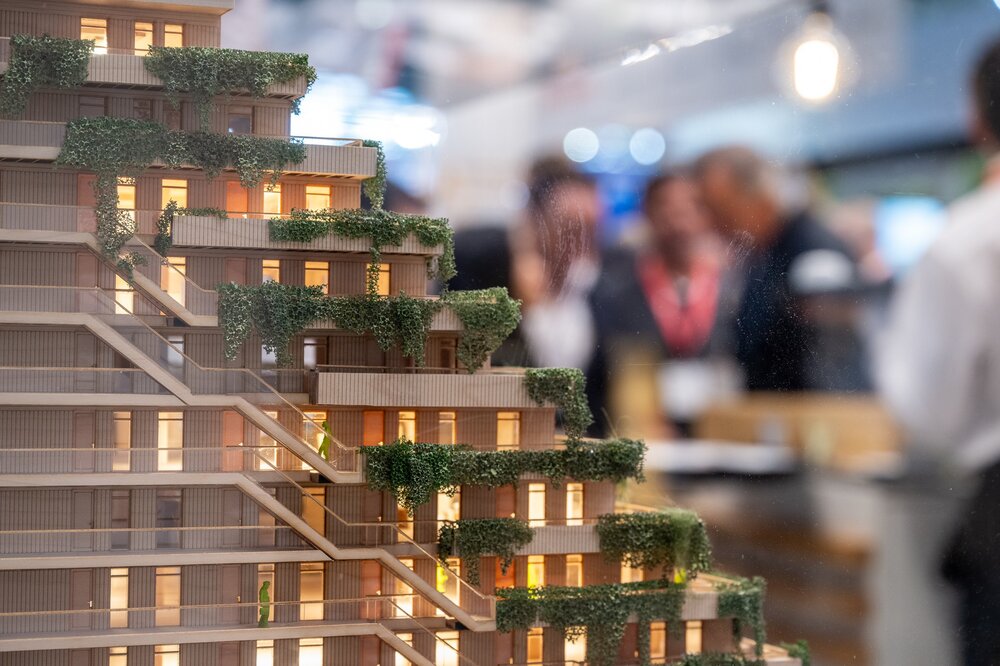
From a sustainability perspective, we will likely have to build differently in the future than we have in the past. One buzzword these days is “serial construction.” In contrast to custom construction, this approach involves pre-manufacturing building and room components based on prototypes and assembling them on-site. Serial construction has always existed, but the materials will change, as the traditional method using reinforced concrete is no longer truly cost-effective and is viewed rather critically from a climate perspective. This trend has been evident for some time in the single-family home sector but is increasingly spreading to the multifamily housing sector as well. However, the problem of a shortage of building land—which is particularly expensive in cities—remains.
Densification is often cited as a solution to the shortage of land. Yes, it is possible to add stories to some buildings or convert attic space to create living space. However, given climate change and increasingly frequent heat waves, whether every vacant lot needs to be filled is another question. We also need space for more green areas and water to prevent the city from heating up like an oven.
But the demands placed on housing are also changing. This does not mean that we are using more and more living space per person—currently, space consumption stands at just under 50 square meters—but rather that apartments are designed in such a way that they can be flexibly adapted to the living situation of their respective occupants. Here’s an example: Working from home is on the rise, but this requires a dedicated workspace within the home. The same applies to the question of whether a home can still be lived in if its occupant has physical limitations. Designing living spaces to be accessible is a necessity, especially in light of demographic change and an increasingly aging society.
Digital control of home automation—the “smart home”—will also become more widespread. This not only offers a higher level of convenience but can also contribute to the smart use of energy in the long term.