
Logistics properties: trends and challenges

What does EXPO REAL have to offer in the logistics real estate segment?
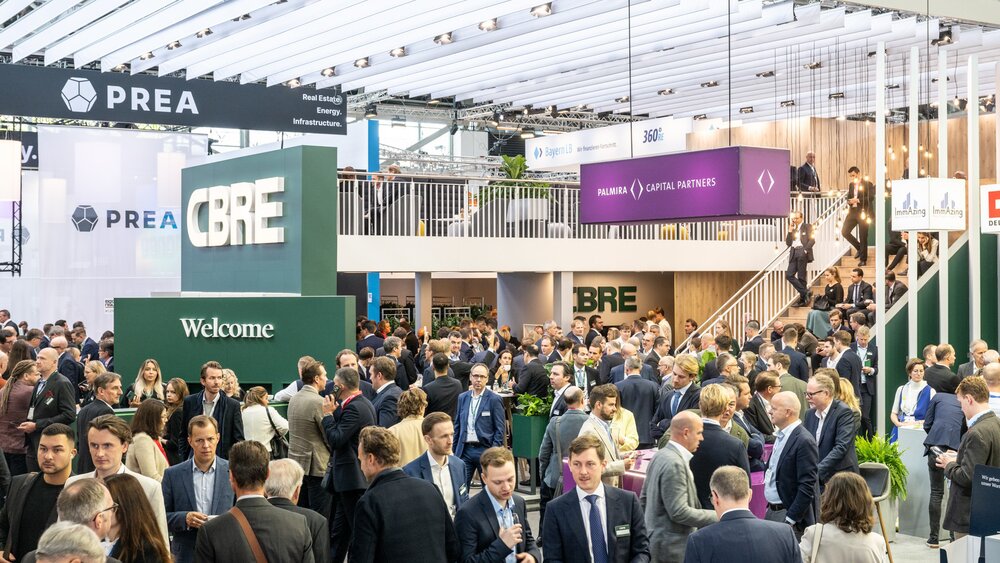
Being a segment of the commercial real estate market, logistics properties have always been a part of the international trade fair for real estate, investment and infrastructure. Along with its growing importance as an asset class, the topic of logistics has also become more prevalent here.
Which exhibitors specializing in logistics real estate can be found at EXPO REAL?
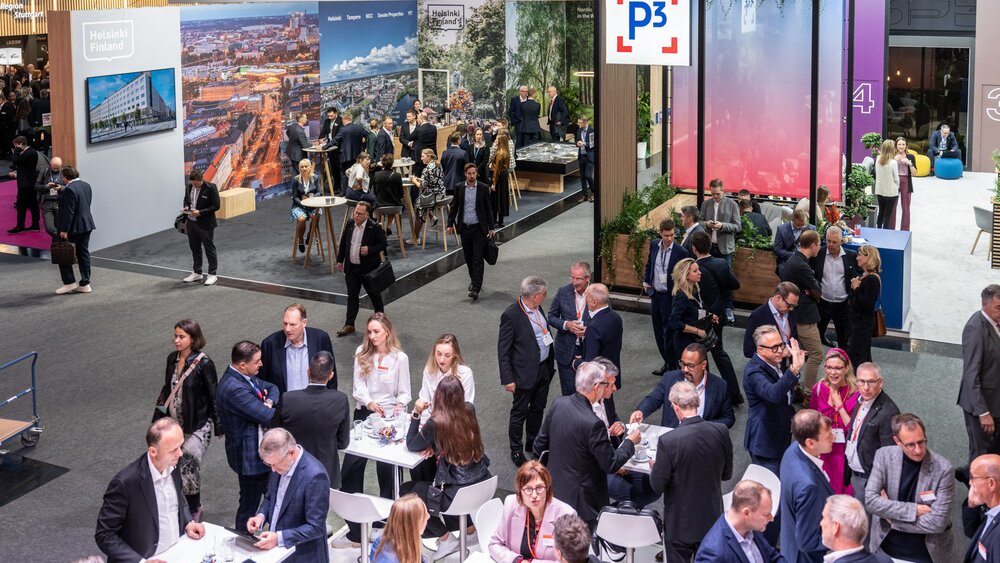
At EXPO REAL, you’ll find well-known national and international project developers specializing in logistics real estate. The trade show also features investors who invest in logistics real estate, as well as locations that are open to hosting logistics operations.
Notable exhibitors at EXPO REAL 2026 include ctp, Garbe Industrial Real Estate, Prologis, and Panattoni. Here you’ll find all exhibitors in the logistics real estate sector at EXPO REAL.
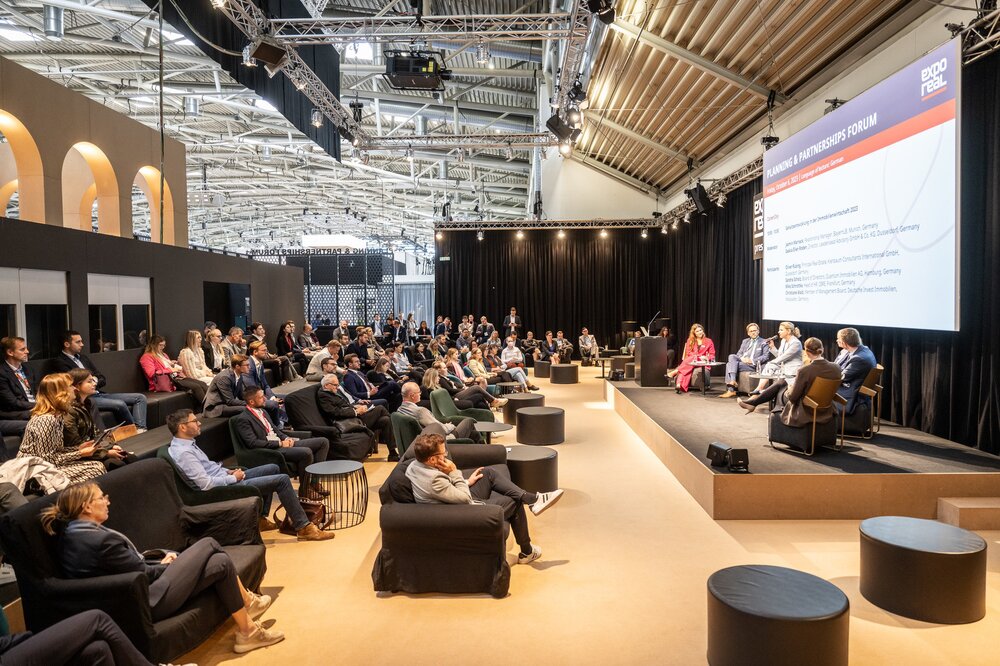
The conference program for EXPO REAL 2026 also focuses on logistics real estate. Examples include the keynote address “Who Is Renting Germany’s Logistics Real Estate?” and the panel discussions “The Logistics Market in 2026/27: Far from Record Levels, but Still Rock-Solid?” and “Airports, Ports, Logistics & Distribution.”
Logistics properties—one term for different types of buildings
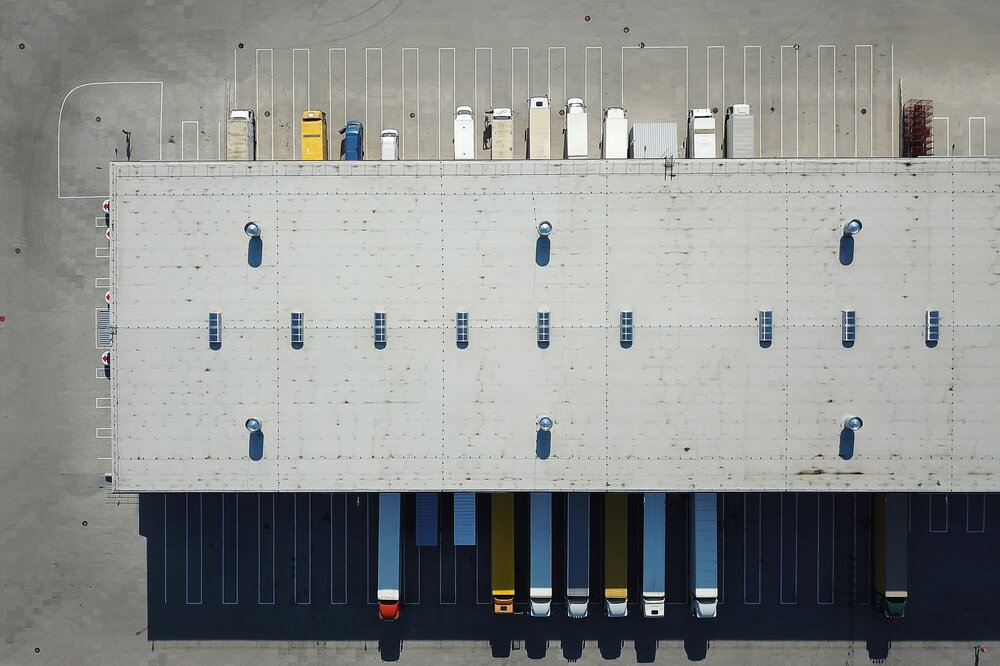
Logistics properties are often considered to be the equivalent of a large warehouse. In fact, warehouses only make up a portion of this kind of real estate. Logistics property is mostly used to supply manufacturing companies with raw materials or to store finished goods. Usually, these warehousing facilities are complemented by assembly activities and similar processes. That is why the term “warehouse” is assigned to the “(light) industrial” sector.
The most common types of logistics real estate are probably transshipment real estate and distribution centers. Transshipment properties, also known as cross docks, are typically used to transfer incoming goods from long-distance transport to local transport. The goods are thus in the transshipment warehouses for a short time, are repacked and then delivered. These halls have a low height and depth but are equipped with a high number of gates to keep the distances as short as possible for goods handling.
Distribution centers, also termed shipping centers, combine the function of a warehouse with the distribution of goods according to orders and may be responsible for regional and national distribution. Usually, such halls are higher and deeper and have more gates than a basic warehouse.
Lately, there has been much talk of last mile logistics. The last mile, i.e., the last part of the transport route before delivery to the customer, often is the most expensive part of the transport. Hence, solutions are being sought to bring logistics facilities closer to where many customers seek to be supplied. However, land is scarce and expensive, especially in and near cities. Consequently, corresponding real estate is still rare.
In addition to the types of logistics properties mentioned above, there are those with special requirements, such as cold storage or hazardous goods warehouses. These special logistics properties are subject to special construction and legal requirements, which is why they are usually only built according to the client’s requirements (built to suit).
From Cinderella to Investor’s Darling: The Rise of Logistics Real Estate
For a long time, investments in industrial and logistics real estate lagged significantly behind those in office and retail real estate. However, since 2012, the share of this commercial asset class in total transaction volume has risen steadily, at times even reaching the top spot. Due to a 14 percent decline in transaction volume compared to 2024—down to 6.58 billion euros—investments in industrial and logistics real estate slipped back to third place in 2025. However, the number of deals increased. The strongest growth was recorded in deals up to 50 million euros, while large-volume and portfolio transactions exceeding 100 million euros declined significantly.
Once again, in the first half of the year, industrial and logistics real estate ranked second among commercial investments—behind office real estate and ahead of retail real estate—even though the transaction volume, at just under 2.5 billion euros, was about 10 percent below the previous year’s figure. As was the case in 2024, international investors accounted for about three-quarters of investments in 2025 and the first half of 2026.
Why is logistics property gaining in importance?
Reasons for the upswing of logistics real estate from Cinderella to Investor's Darling and the high demand for logistics space are:
- high level of division of labor
- reduced warehousing by manufacturing companies - keyword: just-in-time delivery
- globalization and the associated worldwide networking of the economy
- increasing online trade
Logistics Real Estate of the Future: How Will the Industry Evolve?
Despite the economic situation and the still bleak outlook for a prompt recovery, JLL reported that space take-up rose to 5.78 million square meters in 2025—a 6 percent increase from the previous year—but remained one-fifth below the average for the past five years.
The upward trend continued in the first half of 2026. According to BNP Paribas, space take-up totaled approximately 3.3 million square meters in the first six months of the year. This exceeds the figure for the same period last year by 23 percent and is even slightly above the ten-year average for the first half of the year.
However, the western metropolitan regions benefited less from the increases in space take-up. In the Frankfurt am Main area (-20 percent), Hamburg (-14 percent), and Berlin (-10 percent), space take-up declined compared with the same period last year, even though these markets still rank at the top. Demand in the Leipzig area also remained subdued (-32 percent). Düsseldorf remained just slightly below the previous year’s figure (-3 percent), while Cologne (+58 percent) and Munich (+42 percent) saw significant gains in space take-up. The real “winners,” however, were the Ruhr region (+39 percent) and locations outside the major hubs (+42 percent).
Transportation and logistics companies continue to account for the greatest demand. They accounted for more than 40 percent of space take-up. Online retailers from China—and their logistics providers—played a particularly important role in this regard. In the first quarter of 2026 alone, they accounted for 13 percent of total space take-up.
As take-up increased, vacancy rates also stabilized, averaging 4.5 percent. This was partly due to a significant decline in speculative project development. According to JLL, approximately 656,000 square meters of new space were completed in the Big 5 (Berlin, Düsseldorf, Frankfurt am Main, Hamburg, and Munich) in 2025—about 400,000 square meters more than in the previous year. About 70 percent of the new space had already been leased or allocated to owner-occupiers prior to completion. At the end of 2025, approximately 540,000 square meters were under construction, with just under half of that space still unlet. However, construction activity varies by region. While Berlin and Düsseldorf accounted for the largest volume at the end of 2025, Munich, Hamburg, and Frankfurt recorded below-average construction volumes.
The sharp rise in prime rents beginning in 2021 has slowed significantly, with rents remaining largely stable in 2025. The most expensive rental markets are Munich (prime rent: 10.70 euros per square meter) and Berlin (10.50), followed at a considerable distance by Düsseldorf (9 euros).
Logistics properties—trends and challenges
Climate neutrality and environmental sustainability is a predominant concern for all types of real estate, which means logistics property is no exception. This is true for the construction of these commercial properties as well as for their operation and possible deconstruction. Furthermore, logistics properties are no longer simply warehouses, but “smart” buildings with digitally controlled energy consumption, lighting, water and heating. Yet this is not the only reason why logistics areas of all kinds need a digital infrastructure—the advancing automation and increasing digitalization of logistics also require a connection to a “broad data highway.”
Where is the market for logistics properties headed?
Something that concerns the entire logistics industry is the last mile, the majority of which is slightly longer than one mile. It is not only companies, restaurants, supermarkets and retailers that want to be supplied, but also private households that have become used to the options of ordering online. E-commerce has grown rapidly in recent years, and today’s consumers expect their orders to be delivered as promptly as possible. Since most consumers live in cities and metropolitan areas, distribution centers are particularly needed here, as close as possible to potential customers. Another factor is that traffic is more than dense, especially in cities and urban regions, and the large number of delivery vehicles adds to the traffic chaos. For city logistics, one solution would be to create additional transshipment points that could be used to deliver to city districts or neighborhoods—perhaps even with a cargo bike instead of a truck. However, land is scarce and expensive in cities and metropolitan regions. There may be the occasional opportunity, for example, to convert old department stores or factory buildings that are no longer in use into such small distribution centers. So far, however, this has been the exception rather than the rule.
In addition, the population often has little acceptance of logistics facilities in the vicinity of residential areas—for fear of even more traffic. It remains to be seen whether the switch to electric or hydrogen vehicles will increase this acceptance. This transformation, though, will require the installation of charging stations or hydrogen fueling stations at many logistics facilities—a development that may come sooner than expected.
Topics that move the industry
Messe München collaborates closely with Logix, also and especially in setting up the conference program. For example, in 2025 under the heading “Let’s Talk Logistics,” experts discussed “Trends in the Logistics Industry” and “Nearshoring and re-shoring, the impact on European logistics markets”. You can find the complete conference program here.
Since 2013, the Logix Award has been presented to logistics properties in Germany that meet the requirements of users and investors to a high degree. The Logix Awards ceremony takes place every two years at EXPO REAL. The next ceremony will be held at EXPO REAL 2027.

Impressions EXPO REAL