

Trade fair sector retail property: Grand Plaza—the marketplace for retail
EXPO REAL's GRAND PLAZA is a marketplace for all those involved in retail and retail properties to exchange ideas, discuss and find their way around the challenges and trends related to retail and retail properties.

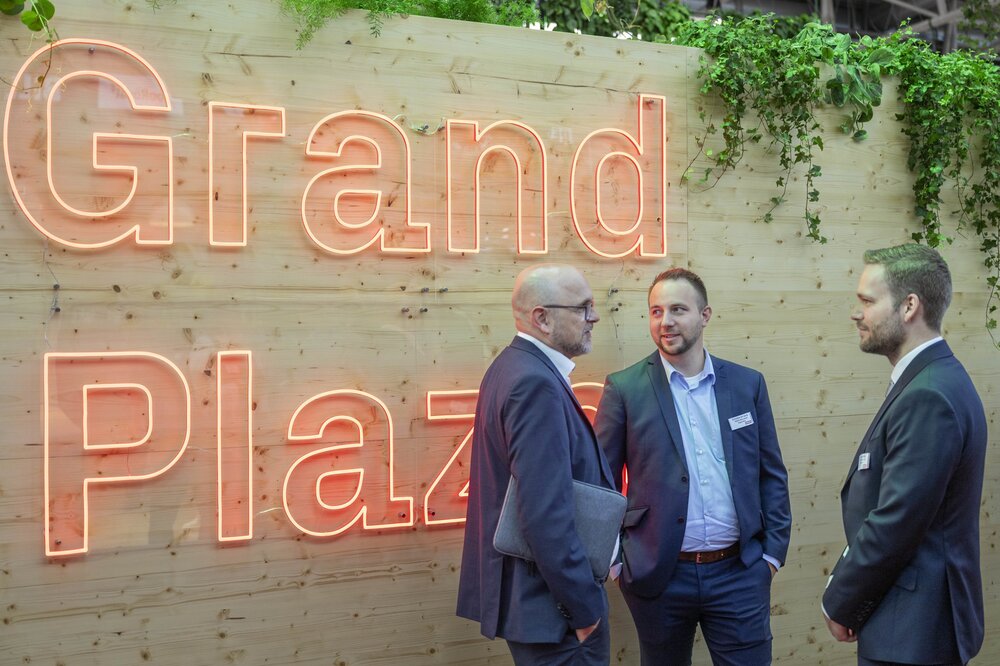
What does EXPO REAL have to offer in the retail property segment?
The international trade fair for real estate, investment and infrastructure has established the Grand Plaza for all those involved in retail and retail real estate as a meeting place for retailers, investors and project developers, operators and representatives of potential locations. This is where anyone who wants to find out about the development of retail and retail property will find information and guidance—and the relevant contacts.
The Grand Plaza: Topics that move the industry
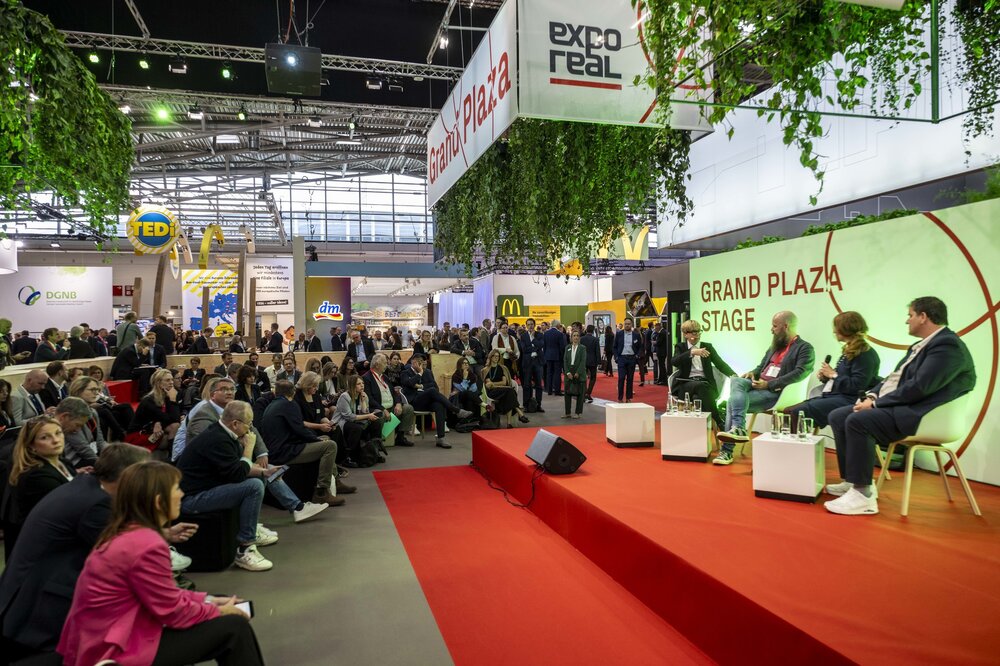
The Grand Plaza is the stage for discussions on the hot retail topics. In 2026, the focus is on the transformation of city centers and the question of what will make our city centers attractive again in the future. Other topics include “Next-Level Asset Management” and “(Inter-)National Benchmarks for Placemaking.” Experts will discuss these challenges for the retail sector and for everyone involved, directly or indirectly, with retail real estate.
Grand Plaza: make use of these advantages for your success!
- Everything in one place: many exhibitors from the retail property sector in the immediate vicinity of the Grand Plaza
- Networking: targeted networking with decision-makers and insiders of the retail industry
- New inspiration the conference program at the Grand Plaza is dedicated to the retail sector
- Attractive meeting place: Grand Plaza market stalls and an exclusive evening event on the first day of the show
Grand Plaza Forum: where the future is discussed
The Grand Plaza conference program not only addressed current topics, but above all discussed strategies for the future—for example, future-proof cities and shopping centers and innovative concepts for retail properties in terms of ESG and sustainability.
Impressions of the Grand Plaza
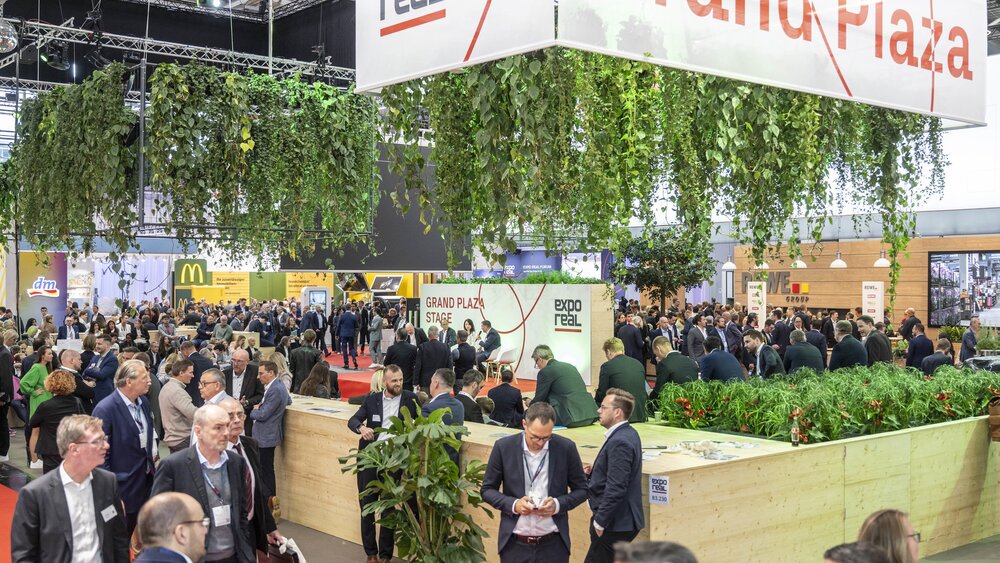


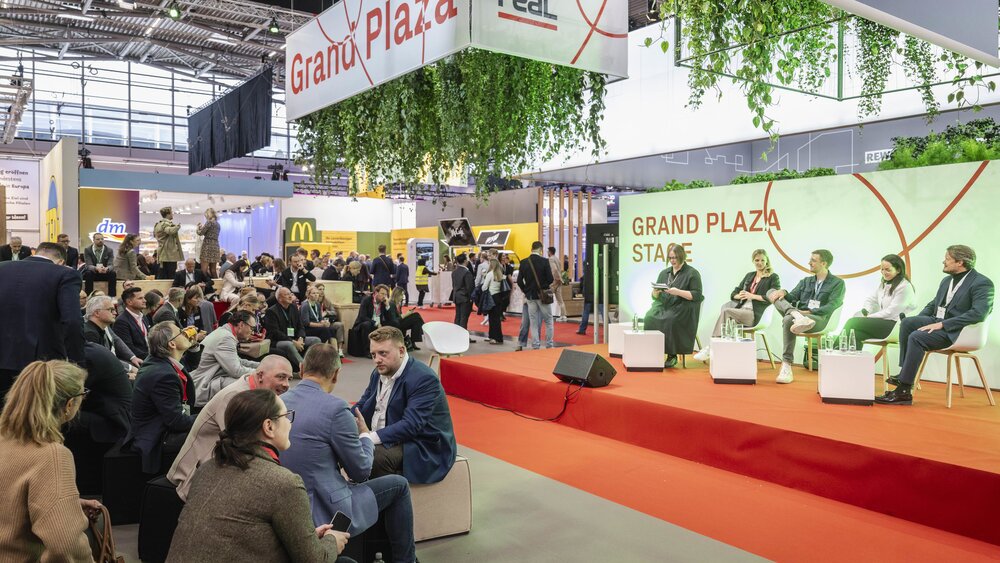
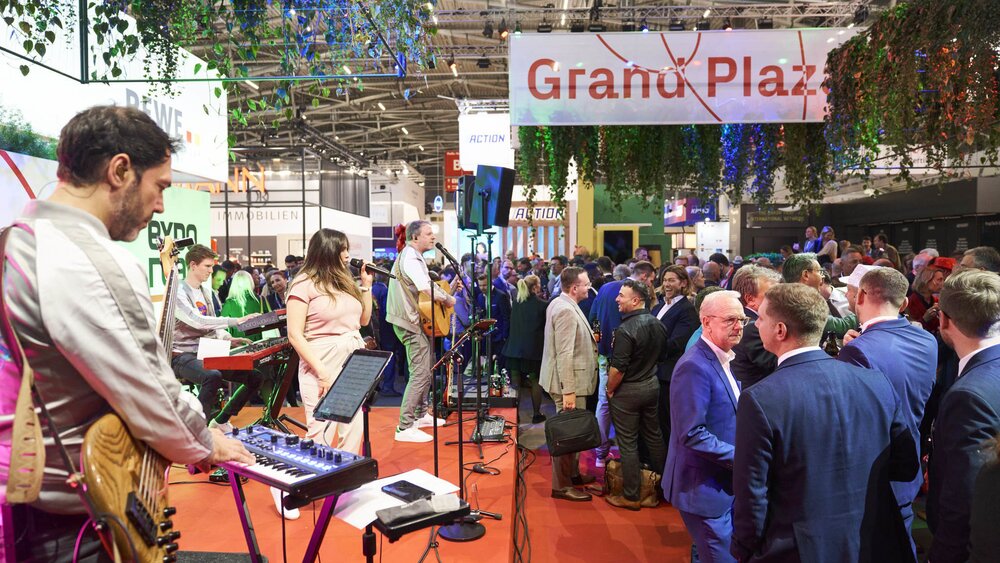





Besides supermarket chains such as Edeka and Rewe, discounters such as Aldi Nord, Kaufland and Lidl, Netto and Penny, drugstore chains such as dm and Rossmann, the focus of exhibitors in the retail property sector at EXPO REAL 2026 included pet supplies such as Fressnapf, non-food-Discounter as Actions as well as toom Baumarkt—in other words, precisely those that are of interest to supermarkets, specialist stores and retail parks. EXPO REAL exhibitors also includes shopping center operator ECE.

Commercial or retail real estate—a term that encompasses a wide variety of formats
Not all retail is the same, a fact that is also reflected in the variety of retail properties. When people think of retail, they often picture downtown retail—store spaces on shopping streets or at least in the immediate vicinity. But even here, the upscale retail spaces for high-end brands differ from those where most people do their “shopping” in terms of amenities and size.
However, downtown areas offer retail space not only along the shopping streets but also in shopping centers and malls—which are now found in virtually every city—where retail stores and services are concentrated, often complemented by restaurants, movie theaters, fitness centers, and other attractive “foot traffic generators.” In addition, there are department stores, which offer a wide variety of goods but have increasingly become a source of concern for cities, as they apparently no longer attract enough customers and their comparatively large spaces are at risk of standing empty.
In addition, however, there is “large-scale retail,” which requires more than 800 square meters of space—furniture stores, electronics stores, DIY stores, and the like. This category also includes full-assortment supermarkets. These large-scale retail establishments are not always located in central areas but are often found on the outskirts of cities. Here, as well as in the areas surrounding medium-sized and smaller cities, so-called retail parks have been springing up with increasing frequency in recent years—a cluster of various retail sectors, often with a large supermarket or discount store as the anchor tenant and other stores that serve local needs. These retail parks usually consist of a large building complex and are managed and marketed by a single operator.
Retail real estate—an increasingly challenging market
The retail sector has been in crisis for quite some time. Above all, the growth of online retail is posing increasing competition to brick-and-mortar stores, and responding to this competition takes time and money. What’s needed are so-called multichannel strategies that take into account the changes in customer behavior in the digital age.
Retail sales have been sluggish for years
The COVID-19 pandemic and its lockdowns brought about a massive disruption in the retail sector. While large segments of brick-and-mortar retail were forced to close, online retail boomed more than ever before. Although online retail declined slightly as the pandemic ended and life largely returned to normal, it began to rise again starting in 2023 and, according to forecasts by the German Retail Association (HDE), is expected to reach 13.8 percent by 2026. The hopes of brick-and-mortar retailers for a renewed upswing were not fulfilled; rather, the war in Ukraine and recent geopolitical uncertainties, high living and energy costs, and economic uncertainties kept consumer sentiment at a generally low level.
While many retailers were forced to close their businesses in the wake of the pandemic, this trend has continued in recent years, albeit at a lower level. From 2015 through the end of 2025, the number of brick-and-mortar retail stores has fallen from 372,000 to 301,500 and, according to HDE forecasts, is expected to drop further to 296,600 by 2026.
Weak consumer spending—a lasting obstacle?
As a result, the situation in city centers continues to deteriorate. Vacancies are often clearly visible, and it is not only the former large department stores but also many small retail spaces that are looking for new tenants.
The reason for this trend is the economic and political uncertainty among consumers, who are showing little inclination to spend money. The GfK Consumer Climate Index hit its lowest point to date in May of this year, at -33.1 index points. Although the index rose slightly to -29.8 index points in June, it remained below the levels recorded since the beginning of 2024.
But it’s not just declining sales that are causing problems for retailers. They’re also struggling with high energy prices and non-wage labor costs, as well as a growing shortage of skilled workers.
What is the state of the retail real estate market?
Despite these negative trends, the retail real estate market has seen a rise in leasing volume again since the end of the pandemic, reaching approximately 470,000 square meters in 2025—only slightly below the previous year’s figure (approximately 500,000 square meters). In the first months of 2026, approximately 100,000 square meters of retail space were newly leased or opened—about 50,000 square meters less than in the same quarter of the previous year, although the first three months of 2025 were marked by large-scale re-leasing activities in department store properties and the former Galeria locations. For small and medium-sized spaces, the approximately 59,000 square meters recorded in the previous year contrast with the just over 53,000 square meters in the months between early January and late March 2026, indicating largely stable demand (BNP PARIBAS REAL ESTATE).
Both BNP Paribas Real Estate and JLL emphasize that demand is coming primarily from international retailers. In the first quarter of 2025, they accounted for 76 percent of space take-up; in the fourth quarter, this share stabilized at 58 percent. The main sectors are fashion, beauty, and sports. Another key driver is the restaurant industry.
For a long time, retail real estate was considered the “investors’ darling,” but in 2023, transaction volume in this asset class plummeted by about 40 percent to 4.9 billion euros. In 2024, investment activity in the retail market picked up slightly again, reaching 6.1 billion euros. The fact that transaction volume was slightly higher in 2025—totaling 6.5 billion euros—is primarily due to three major deals in the hundreds of millions range in the last quarter of the year, when former Signa properties changed hands.
However, the first half of 2026 showed that the retail investment market remains volatile. While transaction volume in the first quarter was roughly on par with the same quarter of the previous year (1.37 billion euros), the second quarter saw a significant decline to around 892 million euros, bringing the total transaction volume for the first half of the year to approximately 2.26 billion euros—a drop of just over 20 percent compared to the same period last year. As a result, investments in retail real estate once again slipped to third place in the commercial real estate market—behind office and logistics investments.
Investors are currently focusing increasingly on specialty and grocery stores, as well as neighborhood retail centers and specialty retail centers. These assets account for about half of the transaction volume. They have the advantage of typically meeting short-term needs, making them less susceptible to fluctuations in consumer sentiment. Tenants are often well-established retail chains that guarantee stable, long-term cash flow. And what also makes these properties attractive in times of high financing costs is that—unlike large shopping centers—their prices are usually below the 50 million euro threshold.
Where the journey is headed: The future of retail real estate
The retail sector—and with it, the market for retail real estate—is undergoing a major transformation. Online retail, in particular, has had a disruptive impact. Customers have quickly grown accustomed to these digital options—not only to ordering and fast delivery, but also to being able to compare prices more quickly online. The retail sector has since adapted to this shift and now not only offers its goods in brick-and-mortar stores but also utilizes all digital channels—the so-called “omnichannel” approach—to market products and build customer loyalty. Nevertheless, this transformation has not been without consequences. It’s not just department stores that are no longer “thriving,” and whose large, contiguous spaces are now often being subdivided “to create an attractive mix of retail sectors with high-traffic tenants,” explains Christoph Scharf, Managing Director of BNP Paribas Real Estate GmbH and Head of Retail Services. Shopping centers, too, are often no longer performing well, despite all attempts to lure people into these temples of consumption through an expanded range of dining and leisure options.
What does the future hold for retail real estate?
However, it is not only changing consumer behavior that is causing problems for the retail sector—and thus for the owners and operators of retail assets. It is also consumer reluctance to spend, driven by a perception that the overall economic situation is becoming increasingly uncertain, as well as heightened price sensitivity, which is leading to a decline in brand loyalty—with the exception of lifestyle labels.
According to a PwC study on the future of retail, the growing diversity of consumers is another factor that ultimately makes it more difficult to sharpen the customer focus. For example, Generation Z—the digital natives born between 1995 and 2010—has less difficulty with innovative technologies such as self-checkout registers and autonomous stores than the often-cited baby boomers, who tend to be more critical of AI solutions in particular. On the other hand, these technologies offer a way to address the growing shortage of skilled workers in the retail sector. PwC estimates that by 2030, roughly one in five retail positions will remain unfilled.
Since the onset of the COVID-19 pandemic and in light of more or less stagnant retail sales, many international chains have revised their previous expansion strategies, resulting in the closure of some locations and the conversion of others into so-called flagship stores. At the same time, other international retailers—not only European but also Asian and Chinese—are entering the market.
In this regard, a further shakeout is taking place in downtown shopping districts, and the specter of the “dying downtown” seems to be ever-present—albeit somewhat exaggerated—in discussions about retail and retail real estate. It has long been evident that vacant retail spaces are often being converted into dining establishments, and that where chain stores leave a void, other businesses and services are establishing themselves. The retail sector is changing, and with it, city centers; small, owner-operated stores are disappearing at an increasing rate, resulting in the retail offerings in different city centers becoming increasingly similar.
Nevertheless, the proportion of space available in the short term remains high at around 15 percent, with cities such as Düsseldorf (6.6 percent of total retail space), Hamburg (6.8 percent), and Munich (7.9 percent) well below the average, while Frankfurt am Main (23.5 percent) is well above it.
Rents have largely stabilized in recent years, though they remain slightly below pre-pandemic levels. Given the comparatively high supply of space, JLL sees little room for rent increases in the near future.
However, the city center is just one location for retail real estate. Even though it was more or less the only location for a long time—and the surrounding neighborhoods and outlying communities offered relatively few shopping options—this “shortage” has at least changed fundamentally. In recent years, more and more supermarkets have sprung up here like mushrooms, ensuring at least local access to groceries. And even in small towns, retail parks are now increasingly being built; these serve local needs while also offering a range of clothing and/or sporting goods that goes beyond what supermarkets, discount stores, and drugstores provide. Large-scale establishments such as home improvement and garden centers, furniture stores, and large electronics retailers remain relatively rare, as they cannot find suitable spaces in urban areas at prices they can afford.
Challenges in the retail real estate market
The biggest challenge facing the retail sector right now is the economic situation, as high energy and living costs are limiting consumers’ ability to spend. This is compounded by growing economic uncertainty. Consumer sentiment remains clearly in negative territory. As a result, significant increases in retail sales are not expected, meaning that cost and space efficiency will continue to be major challenges. However, this also means that less money will be available for investments in the technological advancement of retail concepts.
Where is the retail real estate market headed?
The days when retail real estate was practically a sure thing for investors, with long-term leases, are over. Nor is it any longer possible to quickly re-lease every retail space at any price. In almost every city, you can see vacant spaces, and even in shopping centers, there are a few vacant units here and there. The challenge now is to come up with ideas for how these spaces can be repurposed.
For example, a few shopping centers have already been converted into health centers, and there are plans to use larger spaces for urban logistics as well. Especially in inner-city areas, retail real estate will require more creativity and flexibility when it comes to their future use or repurposing.
The situation is different in the sector of specialty stores and retail centers, which are currently preferred investment properties—and for good reason. Specialty stores—electronics stores, furniture stores, DIY stores, garden centers, and the like—are comparatively “location-dependent,” meaning their lease agreements have longer terms. And retail parks primarily serve local needs, with grocery stores and drugstores—in other words, the essentials everyone needs—complemented by additional, more affordable offerings. This is a sector of the retail industry that may not be quite as prestigious as high-street locations, but which generates comparatively stable rents over the long term.
In the impressions section you will find more impressions from EXPO REAL.